
Boston Skyline Boston Derby Dames Boston women's flat track roller derby. Founded 2005. A proud member of the WFTDA.

OUR NEXT BOUT: April 19

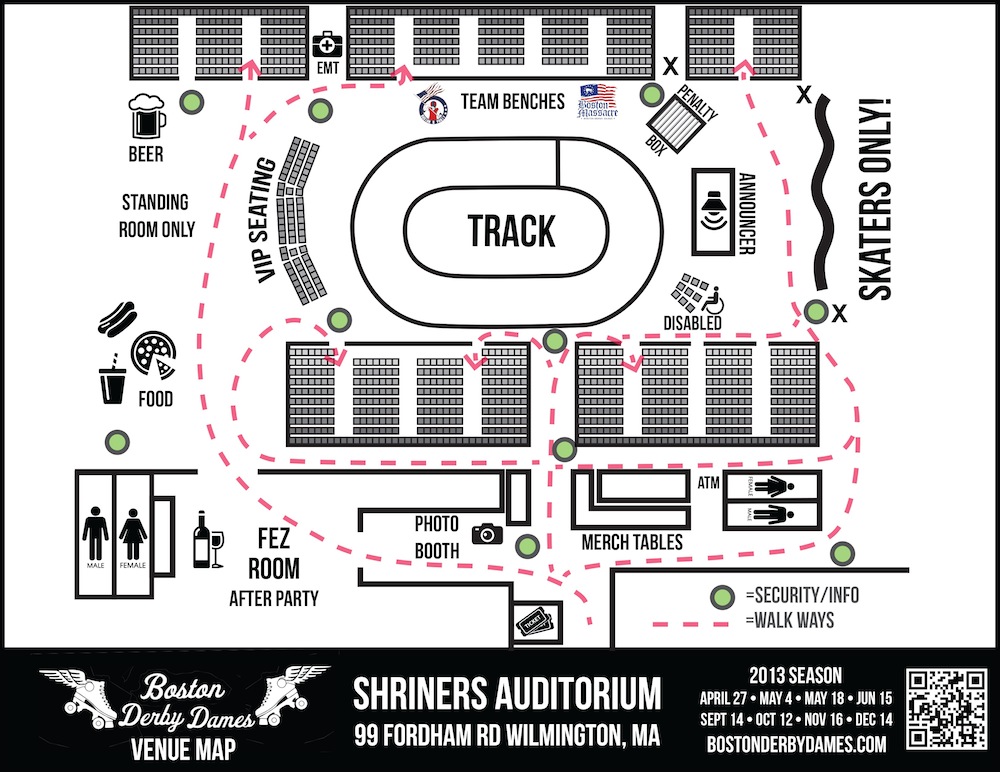
VENUE MAPBOUT FAQOTHER EVENTS →

Massacre
vs.

Diary of a Redliner: Breathing hard isn’t just for the bedroom anymore.

DORpic

Fun fact: trying to jam in a two minute drill is pretty effing exhausting. So is practicing knee falls on the whistle, blocking, and most everything else involved in derby. Your heart rate gets up there. If you don’t start derby with a fair amount of cardiovascular fitness, you will most likely need aerobic cross-training to help you keep pushing through three-hour practices and sprint after runaway jammers.

Aerobic exercise includes running, walking, hiking, swimming, biking, rowing, ellipticizing, jazzercising, Zumba-ing, running Harvard Stadium until you want to vom… Basically, anything that gets your heart rate to a place where you can’t speak a ten-word sentence without having to catch your breath.

You may be thinking, “Okay, I’ve got this!” Women tend to be (though not always, obviously) more comfortable with cardio than other forms of training. Most of us have been on an elliptical or treadmill at some point in our lives, even if we’re not avid gym-goers. But cardiovascular training for a sport is a bit different from a jog through the park or lolling on your favorite machine while you watch an episode of Dr. Who on your iPad.

Choose your weapon

First, it’s important to consider what type of cardiovascular training you’re doing. Especially when you get into multiple derby practices per week, you have to be careful not to overtax the muscles you’ll use while skating, or further muscle imbalances that can lead to injury. Here are some things to consider when choosing your cross-training method:

Running – Everybody knows how to run, right? And it’s pretty similar to sprinting after somebody during a scrimmage. Makes sense that running would be a good option for cross training for derby, right? Not so fast—not all running is created equal, and some may hinder your skating. Think of it this way: The front of your legs (the quadriceps), the muscles that flex your hip, and calves all get a lot of work while skating. Interestingly, these muscles are also used a lot when you’re running on a treadmill, because your body is trying to lift your legs up to keep up with the moving belt; conversely, if you run outside, you tend to use more of the opposing muscle groups (like your butt) to help propel yourself forward. More butt action = happier derby playing. Your best bet? Run outside, particularly with some hills along the way (which give you even more posterior chain involvement). If you do have to run inside (hey, it’s been effing cold out lately—I don’t blame you)—make sure to jack up the incline to at least 2% (if not more) to better simulate outdoor running and keep your legs healthy for skating. (Okay, so I wrote this paragraph, and then the next morning,  was released, explaining that a biomechanics research found a lot of what we thought about treadmill running is wrong. So take everything with a grain of salt. Except for the stuff about hills.  Run on hills. They’re good for your butt.)

Biking – A great low-impact option for improving your cardiovascular fitness; like running, going outside is probably better for your body than staying inside. Biking does have a tendency of tightening up the hip flexors, so be wary if that’s a problem spot for you normally. That said, a good spin class is a great option for getting your interval training on (more about interval training in a second).

Elliptical – Another low-impact option if your body’s not too fond of running. Just keep in mind that unlike a treadmill, which forces you to maintain a certain pace, it’s easy to start slacking off as your body gets tired on the elliptical. Pay attention to your strides or repetitions per minute and try to keep up a consistent pace. Also, even if the machine tells you that you’ve been burning a zillion calories, don’t believe it: the numbers are very skewed. Judge how hard you’re working by how you feel—if you can only say a few words at a time without catching your breath, than you’re working hard. If it’s easy to carry a conversation with your derby wife on the next machine over, you’re probably not burning 1000 calories per hour.

Stepmill – Or better yet, stadiums. A lot of our league members will run up and down the stairs of the Harvard stadium. Nothing gets your heart pumping and your butt muscles firing like running up and down stairs. No matter how in shape you are, running up stairs will challenge you.

Plyometrics and such – One of the best ways to get your heart working is to do a bunch of different quick movements that get your heart rate up—things like jumping rope, hopping on one foot, squats at a very fast pace, swinging kettlebells, etc. String a bunch of fast-paced exercises together, and you’ll end up with the best possible cardio workout for your body: one that takes you through various movement patterns and speeds that keep your body guessing.

And then what?

Once you figure out what kind of aerobic training appeals to you, you’ll want to figure out a plan of action that will benefit you most. There are a few approaches to cardiovascular training, each with different purposes.

Choose the method of cardiovascular training based on what you need help with in derby– If you’re struggling to make it through your red tape practices without a lot of breaks on the sidelines, then working on your overall endurance will help the most. In that case, you’ll aim to do steady, moderate-intensity exercise of your choice a couple days outside of derby practice, building up from twenty to thirty minutes of training towards an hour or so. Just try to keep your heart rate up to a level where it’s difficult to speak more than a sentence without catching your breath.

If you’re fine getting through the duration of practice, but can’t catch up with the opposing jammer when she’s skating away from the pack, you may want to try some high intensity interval training (HIIT): sprint/jump/what-have-you as hard as you can for thirty seconds to a minute, recover for twice that time, then repeat for a total of ten or twenty minutes. (Note that interval training actually helps with increasing overall endurance as well, but if you can’t maintain moderate-intensity activity for a half hour, then HIIT may not be the best option to start.)

Finally, consider how much training you should be doing. Your practices will definitely help with your cardiovascular fitness, so plan accordingly. If you’re going to one day of practice, you probably want to have at least two days of cardiovascular training. If you’re going to two practices, you could probably have anywhere between one to four, three practices would merit between one and three days of training, and so on.

Some folks will do both practice and cardio on the same day; while there’s nothing wrong with this method of training, it’s taxing on the body and isn’t something you jump into immediately. You want to make sure you slowly build up your quantity of exercise over time—a good rule of thumb is only increase your work load by about 10% per week on average. Thus, if this week you did two two-hour practices and then two 45-minute cardio sessions (a total of 330 minutes), you could safely add another half hour session in the following week. Always listen to how your body feels: if you’re extremely fatigued, have a hard time sleeping (or sleep all the time), find your appetite has changed, etc, then it’s time to take some rest.

But wait! There’s more! Next time we’ll talk about agility training and the nuances of training that bridge the gap from girl-who-kind-of-likes-to-skate to athlete.

Posted in Derby 101, Diary of a Redliner


What is Roller Derby?

WHAT IS ROLLER DERBY?
A roller derby bout is played between two teams of five skaters each: a pivot (striped helmet), three blockers, and one point-scoring player, the jammer (star helmet). Blockers from both teams skate together in a pack and are continuously lapped by the jammers. Jammers are sprint skaters, and score points each time they pass an opponent. Bouts are divided into two 30-minute periods composed of an unlimited number of jams, which can last up to two minutes.

Lead Jammer: Calling it Off
The first jammer to successfully pass each player in the pack, legally and while remaining in bounds, is lead jammer. This is not always the first jammer to emerge from the pack, so look for the jam referee pointing at the jammer with one hand and holding his or her arm above their head making an L with the other as the signal. On subsequent laps through the pack, both jammers score points for each opposing blocker or pivot they pass legally, including those seated in the penalty box. The lead jammer can make the strategic decision to end the jam at any time before the two minutes are up. She signals to the referees that she is calling off the jam by placing her hands on her hips and will often do this to prevent her opponent from scoring points.

Is That Legal?
TOTALLY!
• Hitting from the side with shoulders, torso, or hips
• Whipping or pushing a teammate
• Leaping and jumping is completely legal (and awesome!) as long as skaters don’t initiate
blocks while both skates are off the ground
• The Sheriff—hitting the front (sternum) of an opposing skater using their legal blocking zone
• The Slay Ride—a booty block that lifts the opposing blocker off the ground and carries them
a few feet across the track
• Whiffing—landing out of bounds after attempting, and missing, that really big hit

NO WAY!
• Blocking with elbows, forearms, hands, or head
• Engaging any skater more than 20 feet in front of or behind the pack (listen for the refs to call “Out of Play”)
• Skating out of bounds—players can’t purposely skate out of bounds, nor can they engage
opponents or assist their teammates while out of bounds
• Cutting the track—passing skaters out of bounds and re-entering the track in front of them. Cutting multiple skaters, or cutting the last opposing blocker will send you directly to the penalty box for one minute. Watch out jammers!
• Blocking from behind
• Holding, tripping, grabbing, clotheslining, shoving, punching, or chair throwing—this ain’t
your mother’s roller derby!

Referees will assess skaters penalties at the moment penalties occur. Watch
for the referee’s’ hand signals that inform the skater of the penalty they have committed. Also, listen for an accompanying single whistle blast. After the penalty is called, a skater sits in the penalty box for one minute and her team skates one player short. Jammers can have their penalty shortened if the other team’s jammer gets called on a penalty while the first jammer is still serving her penalty. The second jammer will then sit for the same amount of time that the first jammer served. There is space for up to two blockers and one jammer in the box. If the box is full, the skater must return to the track until a teammate stands up making space for the player to sit and serve her penalty in the box.

What’s with All Those Referees?
We hear it all the time, “Dude, there are more officials than skaters out there!” It’s true, but it really does take a small army to officiate a bout: seven referees (who wear the zebra stripes and call penalties and points) and nine officials (who are responsible for recording and relaying a lot of information quickly and accurately). Here’s a breakdown of the sixteen
standard roles:

There is a Head Referee and Head Non Skating Official for each bout that make sure that everything is up to WFTDA standards, and that the bout is staffed by qualified referees and officials. The bout head referee leads pre-bout meetings with the teams, oversees the ref crew that day, and handles any referee disputes. Only the most experienced referees can hold this position.

There are also two jammer referees—one per team. These refs signal the lead jammer, keep track of points per lap, and blow their whistle to end the jam if the lead jammer calls it off. They wear an armband in the color of the team they’re tracking, and switch teams at halftime. They communicate to the Scorekeeping official that they have been paired up with for that bout by signaling points at the end of each pass through the pack. The Scorekeepers confirm the points by signaling back, and then report the points to the Scoreboard operator. The scoreboard operator makes sure the scoreboard reflects both the score and the time accurately, and communicates with the Scorekeepers and the Jam Timer to make sure everything is in agreement.

The inside pack referee watches the pack for penalties. Look for the hand signals used to
communicate the nature of penalties to the other officials, especially the Penalty Tracker and Inside Whiteboard Officials. There are usually three outside pack referees who call penalties that might go unnoticed from the infield, like an elbow to the ribs, or returning in bounds ahead of an opponent when they should have returned behind that opponent.

Referees report their penalty calls to the penalty tracking official. The PTO keeps track of what penalties are assessed to which player, and communicates with the Penalty Wrangler and Inside Whiteboard Officials to make sure that players serve their penalties, and that players who were sent back to the track because the box was full head to the box once space is opened. The Penalty Wrangler and Penalty Box Manager use small white boards to communicate which players haven’t been to the box to serve their penalty yet, and let the referees know to communicate to the player when it is time to return to the box to serve the penalty.

The penalty timing officials and their trusty stopwatches rule the box. They keep track of how long each skater has to sit, let her know when it’s time to stand ten seconds before their penalty time is up, and when their time is done so they can return to the track. Usually there is one penalty box timer for each team, and a Penalty Box Manager who manages penalties to the jammers and helps keep things running smoothly in the box.

Nothing happens without the jam timing official. The Jam Timer will let the skaters know the jam is about to start by holding their hand in the air and calling out “Five Seconds”. The jam starts when the whistle blows, and the jam timer drops their hand. If a jam lasts a full two minutes, the jam timer’s four-whistle signal ends the action. He or she also makes sure only 30 seconds elapses between jams, and lets the players know when time out’s and play stoppages begin and end with a combination of whistles and hand signals.

The inside whiteboard official job looks simple: write down the names of skaters who have been assessed a penalty, and mark on the board when the penalty has been served. If the box is full at the end of the jam and a player has not served her penalty, she must skate in the next jam so she can serve her penalty as soon as a space is open, or she will be assessed an additional “Delay of Game” penalty. It’s not only important for the officials to have this information, because bench managers also rely on this information when deciding which five skaters to send out for a jam.

BDD is very active in the governing body WFTDA, and will occasionally try out ideas to improve the game, otherwise known as “beta testing”. One example of this is moving the inside whiteboard to the outside of the track where both teams can see it, so it doesn’t obstruct the view of the crowd.


Posted in Derby 101


Featured Skater: Artoo Detoonate, #B33P

When considering skaters who impress both on and off the track, Artoo Detoonate, #B33P, comes instantly to mind. Much like the robot she’s named for, Artoo maintains an impressive bank of knowledge and is constantly working to understand advanced derby strategies and techniques for the benefit of herself and her teammates. She exudes a calm competence during gameplay that belies the speed of her feet and the processing going on in the interstellar, human computer that is her brain. Off skates, Artoo guides her leaguemates and opponents with her incredible positivity and supportive feedback. Read on to learn more about the skater who has helped bring balance to the force that is the Boston Derby Dames.

If you had to sum up roller derby in 3 words, what would they be?

Insanity. Delight. Flying.

How did you find roller derby? What inspired you to want to play derby?

It sounds cheesy to say “it found me,” but it’s sort of true. (Though really, it was more like it pushed and pulled and dragged me along until I actually started paying attention.)

I was an ice skater for several years as a kid, but was never very serious about the whole thing. Years later, in 2009 I got hooked on watching the game and the idea of putting on skates again from a friend at , but didn’t actually touch a pair until 2010. And even then, it was just goofing off at rinks and doing three-turns and mohawks—I swore up and down I had no interest in playing derby, just having fun on skates and, as a bonus, avoiding going to the gym.

It wasn’t until I moved to San Francisco that I even affiliated myself with a derby league—the had a recreational skating club called Reckless Rollers, and after months of making excuses, I joined up in May 2011. I blame the coaches there (Mindianapolis 500 in particular) for everything that’s happened since: They took a goof who liked doing silly things on skates and sort of liked watching roller derby and made her obsessed with the game. I protested that I didn’t actually want to play right up until that January, when Mindi basically goaded me publicly into trying out for the league proper. And of course once I did, I completely fell in love. Surprise!

Seriously, though: The people I met along the way, they were my biggest influences and inspirations whether or not I consciously realized it. My buddy Jeff, who showed me a way to have fun on skates that didn’t involve salchows and sit spins; Mindi, for kicking my ass; and Mars, one of my first derby friends, who gave me someone to race against during our endurance skates. Derby is such a wonderful little community.

And really: For a girl who spent most of her formative ice skating years wishing she could just make a short program out of crowd-dodging and speeding around the rink, roller derby seemed pretty much tailor-made.

Where did your derby name come from?

I knew I wanted something Star Wars or robot-related—partially because I’m a huge Star Wars geek, and partially because I wanted to decorate my helmet like a robot’s. (Excellent motivations, right?)

I skated as “Shred Leader” with the robot from as my number (RIP, RX24!) for a brief month or two, but knew it wasn’t going to be my real name. I toyed with “Artoo Dee-struction” for awhile, but it was my mother who solidified it in its current form. “I’ve got it. Artoo Detoonate—It’s cute and crazy, just like you!” Uhm, thanks, mum. But she wasn’t wrong!

What teams do you play for?

I play for the Cosmonaughties, and last year played for the B-string of Boston’s travel team, the Boston B Party. Tryouts for the 2014 travel team are in a couple of weeks, though, and I have my eye on them.

You transferred to BDD from BAD’s training and rec team. Do you feel that joining BDD has helped you on your path to awesomeness? Did your experience there help fuel your passion for coaching BDD’s fledgeling TRT?

Absolutely. BAD gave me the initial inspiration and confidence to join derby, but it’s Boston that’s made me the skater I am today and laid the groundwork for my years ahead.

I joined BDD when our Training and Recreation program was barely a few months old, and really got to witness it grow and change as I was evolving, too, which was crazy exciting. Once I got teamed, I kept up with TRT because it just seemed like such a great learning space, and I’ve always loved helping other folks find their path—coaching and teaching seemed like a natural extension. I found the player I wanted to be by going through both BAD and BDD’s recreation programs, and it was really important to me to give back and be a part of that process for other skaters.

I also can’t stress enough how amazing both the Cosmonaughties (my home team) and Boston’s travel team have been to my growth as a skater. The Cosmos drafted me midseason in 2012—despite the fact that I’d never played a regulation bout—and immediately put me out and trusted me like I’d been on the team for years. I owe so much to each one of them for believing in me and constantly challenging me to be a better teammate, skater, derby player.

My Cosmo teammates even pushed me to try out for the travel team in 2013, and I’m so glad I did. Just two months of travel team play and practice made me into a completely different skater, and it introduced me to my latest derby obsessions: footage study and gameplay.

How do you train on your own outside of derby?

When I first started, I had this nice little notion in my head that derby *was* training, and I didn’t need to do anything else. Ha ha ha. Needless to say, I learned pretty quickly otherwise. It’s not even so much about building general endurance or strength, for me—it’s about injury prevention and being able to achieve what you want on the track. If you don’t have good core strength, you’re going to be falling all the time, your knees will hurt, and it increases your chances of crashing in a bad way.

I try to train at least two days a week outside of team and league practices, if not more. One of those days is all about strength and resistance training—kettlebells, exercise bands, planks, bridges—while the other focuses on short-burst interval training. I also need at least a few hours a week of goof-off time on skates. When I’m on the track, I want to be able to concentrate on the game, not my skates—even if I’m backwards, on one foot, balancing precariously over a boundary. So I tend to wear my skates a lot—even in my apartment—and do ridiculous things on them.

What do you think Boston needs to do to be successful going into the next season?

I think we made huge strides last season in our gameplay and our skating skills. This year it’s all about continuing that pattern, studying the top teams, staying calm, and working on our speed modulation and timing.

I know it’s a lot, but what do you do for BDD off the track/behind the scenes?

I run our Communications Committee and make sure everything’s being updated on social media and our website, along with overseeing poster design and the street team. Last year’s big project was our new website; this year is all about getting together a cohesive brand. I’ve been chanting “BDD brand book” for the last few months—we’ll see if 2014 is the year we actually get it together.

I also co-coach our C Team with the lovely Beantown Brawler, helping our newest scrimmage-eligible girls advance their gameplay and their skills and giving our retired skaters a fun space to skate. And this year, I’m co-captaining the Cosmonaughties with the incomparable Stella Kronos (née Tiny Dancer).

How do you feel in the middle of a jam?

Like Luke Skywalker in the Death Star trench. Eerily calm but focused. Jams run at quarter-speed for me—everything’s in ultra-slow motion. Unfortunately, that sometimes includes my feet, which I’d much prefer to run a little bit faster than everything else.

You struggled some with injuries last season. Do you have any advice for staying positive, even while off skates?

It’s really, really, really, really hard. Excruciatingly hard. Especially the first week you get back on skates and the rush of being back combines with the sinking realization that you’ve just lost months of skill development and muscle training. Or, as what happened to me, you return and then put yourself right back on the disabled list.

So two tips: My first is to find some way to keep your derby brain active and excited about the sport despite not being able to play it. For me, that was coaching and endless footage-watching. I was able to learn a lot by watching and working with others, even if I couldn’t work on what I wanted to myself. The second is to stay off your skates until you’re fully healed. I know it sucks, but nothing’s worse than coming back only to sit right back down again. Your derby career can last you years if you take care of your body—don’t shave time off that just because you’re impatient and don’t want to wait a few more weeks.

What was your favorite moment from last year?

Coming back from a shoulder injury and months off skates to play in the B Party’s last game of the season up in Vermont against the Black Ice Brawlers and a few Mean Mountain Boys. During the warmup, I felt absolutely horrible about myself and my skills, sucking wind, etc. But I took a second on the bench during the first jam, focused on what mattered (skating with my friends and having fun), and had one of my best games ever. I realized that despite the injury, I’d still grown as a skater, and taking the time off had actually let my body heal and get to where it needed to be to play at this level.

If you could go back in time and talk to your newbie self, what advice would you give her?
Move your feet, move your feet, move your darn feet! And stretch more after practice—your muscles will thank you.

Who are your derby heroes?

So many. Probably too many to list. BAD’s Trixie Pixie and Chantilly Mace were huge jamming inspirations—they’re both small, but so mighty—and I consider Brawllen Angel my spirit blocker (she’s everywhere, wicked smart, and faster than you ever realize). I also love watching the Texies play. Smarty Pants and Sarah Hipel are so amazing in their quick thinking on the track, while Polly Gone and Fifi teach a master class in blocking every time they’re out there.

And I could gush endlessly about Boston. Space’s mohawk blocking and jamming; Mangle’s eerie ability to be EVERYWHERE; Shayna’s brilliant derby brain and terrifying derby butt; Hard Core’s terminator stare.

What is your favorite thing about derby?

It’s the closest I’ll ever get to flying in a space battle.

But really, the people. Hands down. While I’ll always adore skating, it’s the people that make me love this sport so much, and challenge me to rock every day harder than the one before.

What do you do when you’re not playing roller derby?

I’m a technology writer by trade, so I spend a fair amount of time playing with the newest Apple gadgets and gizmos. I also do a bunch of miscellaneous things in my (limited) spare time: doodle, knit, swing dance, perform and direct radio plays, cook, and play the occasional game of D&D.


Posted in News


Diary of a Redliner: Why derby players should put a tennis ball in their butt

Everyone should own one.

Last time on Diary of a Redliner, we talked about cross-training– specifically strength-training– with the help of a shirtless dude. Today marks the second segment in this once-in-a-while series, in which we talk about how to make sure your appendages move in the directions they’re supposed to.  Hooray for flexibility training!

What is flexibility?  A lot of times we talk about it simply as “stretching.”  When you’re not flexible, you might call yourself, “tight.”  Over in fitness-professional-land, we talk about flexibility in terms of “joint range of motion” and “muscle elasticity.”  The terms sound about like what they mean– joint range of motion has to do with how well your joints move in the directions they’re supposed to, and muscle elasticity means how much a muscle can stretch through it’s full range of motion.  The two can be related (ie, an inelastic muscle can prevent a joint from moving properly), but they can occur independently as well (for instance, a joint may also be impeded because one of the muscles around it doesn’t work hard enough to move the joint properly.)

You’re going to run into a couple different flexibility issues as you skate more.  First, you’ll notice that you may not have the joint range of motion to perform certain moves, like mohawks (skating sideways, with your feet turned out) or even the basic skater stance, because certain muscles are always shortened/inelastic (read: tight), thereby pulling your body out of proper alignment and messing with your skating mojo. In this situation, you’ll want to work on stretching the problem muscles for thirty seconds at least three times a week (and after practice) to help them fully lengthen.

Second, you’ll notice that certain muscles get tighter because of skating, and need to be stretched regularly to correct the imbalance. For instance, your right butt and hip muscles will get tight from pushing to the side with the right foot, and will need to be stretched to keep your pelvis from getting misaligned and, therefore, keep lower back and knees happy.

Below I’ve illustrated a few stretches that are necessary for every skaters’ cross-training repertoire.  I’ve highlighted the areas where you should feel the stretch in red.

The Stretches Every Derby Girl Should Do:

Hip flexor stretch - Get into a half-kneeling position.  Squeeze the butt of the back leg to push that hip forward– you should feel it along the front of the hip.  Deepen the stretch by reaching up with the arm on that same side.

Hip Flexor Stretch!

Quadriceps stretch - Pull one heel up behind you. Keep your knee from floating away to the side of your body and squeeze your butt to keep your hips extended.  You should feel this in the front of your thigh.

Quad Stretch!

Piriformis stretch – Lie on the ground.  Cross one ankle over the opposite knee.  Pull the bottom leg to your chest.  You should feel this in the butt of the top leg.

Piriformis Stretch!

Hamstring stretch - You probably know a bunch of ways to stretch the back of your leg.  The best way to really isolate it is to actually bring your knee of the leg you’re trying to stretch towards your chest with the leg bent; then attempt to straighten the leg out. Unfolding the leg this way (rather than pulling the leg up from the ground while it’s straight) will help keep you from using your lower back to cheat the stretch– even if you don’t get the leg entirely straight, it’ll get a deeper stretch for the muscle.  If you can’t reach your leg with your hands, then you can use a strap or rope to help pull on your leg.

Hamstring Stretch!

Calf stretches – Stand in a stagger stance near a wall.  Shift your weight into the front leg, while pressing the heel of your back leg down. Calf Stretch!

Chest stretch – Go up to a corner and place your arm on the wall, so both your elbow and shoulder are bent at a 90 degree angle.  Walk forward and turn away from the extended arm. You should feel the stretch in the chest, particularly near the shoulder.

Pec Stretch!

Trapezius stretch – With your face forward, gently pull your head to the side.  Imagine you’re holding a heavy suitcase with the opposite arm.  You’ll feel this in the side of your neck.

Trapezius Stretch!

Levator Scapula stretch - Similar to the trap stretch, just turn your head so you face the direction you’re pulling.  You’ll feel the stretch more along the back of your neck. Heaven.

Levator Scapula Stretch!

You may have heard at this point that holding stretches before a workout is useless or even harmful. Let me clarify: That’s sort of true.  Holding a muscle in a stretched position, called “static stretching,” causes the muscle to relax and reduces the amount of work it can do for about an hour after the stretch.  Thus, it’s probably not the best idea to stretch your quadriceps along the front of your thigh and then try to go do a bunch of squats, which use the quadriceps to drive the movement.

That said, sometimes a muscle is way too short and working too hard, which throws off the exercise—in a squat, that might be the hip flexors or the calf muscles.  Stretching the muscles that are overactive and starting off too short can actually help maintain better alignment for the movement because you want those muscles to be less powerful than they usually are.

Conversely, sometimes muscles are tight but shouldn’t be stretched—for instance, the muscles of the lower back will often activate to stabilize the hips and spine if the glutes and interior abdominal muscles aren’t working well enough.  In this case, you’ll find that no matter how much you stretch the muscle in question, it always stays tight and you can’t move the full range of motion that you should be able to.  This situation usually indicates that some other muscles need to be stronger; until they start working as hard as they need to, the other muscles will continue to overwork and stay tight.  Think that’s happening for you? Go back to my strength-training article and do the exercises I listed.

You Want Me to Do What With That Tennis Ball?

A lesser known form of flexibility training is self-myofascial release (SMR). When stretching, you release muscle tension by pulling on it until the muscle relaxes and lengthens.  With SMR, you apply pressure to the muscle until knots in the fascia (the saran-wrap-y tissue surrounding the muscle) release. Most often this type of work is done with giant foam rolls, but it can also be done with tennis balls, golf balls, god-awful knobbly things, etc.  Denser or deeper muscles often need smaller, harder objects (That’s what she said!), while more superficial muscles will need a softer implement.  In other words, you may find to really work on your butt, you may need to sit on a tennis ball, but for your calves, one of the foam rollers at your gym (or floating around the fort) will be fine. You apply pressure to the painful knots in your muscles for thirty to ninety seconds, when the tension usually releases. SMR is great for areas that are difficult to stretch or lengthen, like the IT Band along the side of the leg. SMR can be performed daily, and is actually great to do before you workout because it helps calm down overactive muscles.

Although I think SMR is fantastic for most people, I really recommend it if you’re someone who’s experiencing tight muscles when skating, but actually have full range of motion when at rest.  What’s that mean?  You may find that you can’t rotate your hip much when you’re skating, or you lean over a lot more than you should, but the second your skates are off and you go to stretch, you have to seriously contort yourself, do splits, or perform other yogic feats to feel any sort of stretch in the muscle.  In that case, your muscle may be long enough, but overactive— SMR will be more helpful in getting the muscle to calm the [expletive deleted] down.


Once you find a foam roller (available at most sporting goods’ stores, as well as the weird little massaging chair store below the gym where I work and, of course, the interwebs), here are some ways to make it useful.

Calf rolling – Sit on the ground.  Put your calves on the foam roller.  You can add pressure by crossing one leg over the other or lifting the rest of your body off the ground (or, if you enjoy pain, both).

calf rolling!

IT Band - The IT band is a web of fascia that runs from your hip to your knee along the side of your leg.  You lie sideways on the foam roller, the bottom leg straight. Then loop the top leg over it, so the foot is on the ground.  Lift the bottom foot of the ground.  If you want to add pressure, stack your legs.  You’ll usually feel knots around the hip area, mid-thigh, and near the knee.

IT Band rolling!

Piriformis - The piriformis is a finicky little muscle deep inside your butt.  The sciatic nerve runs through it, so when the piriformis is overactive, you can feel pain all down your leg and into your back.  To roll it, you sit on the foam roller, one ankle crossed over the other knee. Put the opposite hand on the top knee. Tip towards the hip of the top leg.

Piriformis rolling!

Quadriceps – Lie face down.  Roll on the front of your thighs, with your feet off the ground.  You can cross one leg over the other to apply more pressure.  Usually you’ll feel knots in the middle of the thigh and by the knee.

Quadriceps Roll!

Hip Flexor- Lie in a similar position as with the quads, but lift one knee up to the side.  The other leg will remain straight.  Roll along the top of the thigh, right below the hip bone (the ASIS joint, for you anatomy nerds).  Swipe the straight leg around like a windshield wiper to find other sore spots.

Hip flexor!

Adductors (inner thigh) - Still lying face-down, straddle the foam roller, with the roller at a slight angle so it’s perpendicular(ish) to the leg you’re rolling.  Yes, rolling your inner thigh looks inappropriate. How else do you expect to make friends at the gym? You’re welcome.

Adductor rolling!

Remember, even if stretching and foam rolling seems like a waste of time, it’s not– it’s just as important as strength training in a derby player’s regimen.  Flexibility training helps prevent injury (always good) and helps you use your muscles  more effectively, so you become a better derby player.  And we all want to be better derby players, right?  (Unless you’re just reading this blog to look at my pretty stick figures.  I totally understand.)

Next time on Kat’s Really Long Monologues About Cross-Training: Get Your Ass Off the Elliptical and Do Some Useful Cardio.


Posted in Derby 101, Diary of a Redliner


Bout Recap: Home Team Championships

Photo by Joe Medolo

BDD’s 2013 Home Team season ended on December 14th, 2013 with two hard-fought bouts that determined the winner of the Golden Fez and the ranking of the third and fourth place teams. Despite a snowstorm outside, skaters turned up the heat with intense athletic competition inside Shriners Auditorium.

997010_570084926413604_2087659497_n

The first game was a battle for third place between the Wicked Pissahs and the Nutcrackers. It started off with a jammer chase: Pissah Bad Person chased lead jammer Crown Joules (Nutcracker Co-Captain) and forced her to call it off with only one point. This jam set the tone for most of the first half, with both teams earning roughly equal lead jammer percentage, and without developing a strong point differential. In the second jam, Maya Mangleyou was able to bring the Nuts score up to nine points, but The GunShow also put up four for the Pissahs. The third jam saw the Pissah’s jammer Truant sneak in three points to Dr Pepper Spray’s two for the Nuts, despite Pepper’s status as lead jammer.

540098_570089186413178_308008098_n

The Pissahs began to take the lead from the Nutcrackers in the fifth jam, when The Gun Show brought them to 14 against the Nuts’ 11. Although the lead quickly reversed again just two jams later when Mangle put up 10 points for the Nuts during a power jam, she picked up a penalty just as the Nuts were gaining momentum and was sent to the box. This gave Truant a chance to rack up five more points for the Pissahs, ending the jam 25 to 23 Nuts. The very next jam saw The Gun Show return the lead to the Pissahs with the power jam she inherited from Truant, but Mangle stifled this momentum as soon as she was released from the box with tough jammer-on-jammer blocking.

1475905_570086693080094_1627059329_n

In the 10th jam, the Nutcrackers earned lead jammer status, but Mangle was cleared out of bounds by Pissah Co-Captain Neurotic Tendency after only picking up two points during her scoring pass. In the meantime, Truant was able to sneak through and grab four points for the Pissahs. The Nuts earned lead jammer status again about halfway through the first period, which gave Dottie Danger the opportunity to put up five points while the Pissah jammer struggled with an aggressive wall of Nutrackers. Over the next two jams, Crown Joules and Dr Pepper Spray were able to build the Nuts’ lead, despite some really strong defense from Pissah blockers Neurotic, Maully O’ffender, and Stevie Nixher.

944834_570087023080061_420151056_n

The Nutcrackers continued to build their momentum, but quickly found their jammer in the box. This gave Bad Person a power jam in the Wicked Pissahs’ favor, and she picked up 25 hard-earned points. The Pissahs took the lead that they would hang onto for the rest of the half.

1512790_570088583079905_91400927_n

The next few jams saw low scoring passes and strong teamwork from both teams. Pissah blockers Neurotic, Maully, Ubee Trounced (Co-Captain), Bad Person, Miss Mary Smack, and Rock of Shove all played impressive defense, shutting down several Nuts’ jammers in a row. But the Nuts fought back hard, and Mystic R.I.P.her, Badonkey Kong, Mandoline Slicer, and Farmer Geddon kept the Pissah jammers to a scoring minimum.

1508513_570087083080055_106858471_n

The Pissahs did pull away near the end of the half with a 33-point power jam for Stevie Nixher. But the Nuts built some momentum with a last-minute power jam for Mangle. Unfortunately for the Nuts fans, she was sent to the box and the power jam was handed over to the Pissahs’ Rough Ann Tumble. Knuckle Sammy was able to put up nine more points for the Pissahs in the final jam, ending the half 119 to 69.

960103_570084863080277_1758730343_n

The Nuts began closing the gap in the start the second half when Planitz Collide took the lead despite a strong Pissah wall. Offensive help from Badonkey Kong allowed Planitz to put up 15 points while the Nuts’ wall held back the Pissah jammer. Two jams later, the Nuts built even more momentum with a 25 point power jam for Mandoline Slicer that brought the score to just 125-113 in the Pissah’s favor. Mangle was able to sneak in some points for the Nuts without having lead jammer status on two separate occasions.

1525119_570088163079947_2032853012_n

With the game now incredibly close at 125 to 122, the Pissahs earned lead jammer status seven jams in a row with Knuckle Sammy, The Gun Show, Bad Person, Blood Bath Bettie, and Rock of Shove all helping to solidify the lead. A mid-half power jam for The Gun Show (and after a star pass, Estrogeena Davis) racked up 30 points for the Pissahs. Blood Bath Bettie was then able to add 13 more points when she inherited the power jam. Despite strong Nutty defense and notable hard hits from Farmer Geddon, Planitz Collide, Dottie Danger, Badonkey Kong, and Nutcracker Co-Captain and MVP Belle Air Bomber, the Pissahs ended their run of seven leads with the score standing 181 to 126.

1526261_570088013079962_1543034998_n

But the game wasn’t over yet, and the very next jam was the start of a Nutcracker comeback as Slicer put up 30 points on a power jam. Mangle quickly followed this with 14 more points for the Nuts. Another power jam for Slicer, and a star pass to Belle Air Bomber, brought the score to 181-178 Pissahs. Rock of Shove and Dr Pepper Spray each put up points to bring the score to 185-182 Pissahs. Mangle took the lead in the next jam, and with a single scoring pass took the lead for the Nuts while being chased down by Estrogeena Davis. When Mangle took the lead again in the next jam, and Pissah MVP Bad Person appeared trapped behind a wall of Dottie Danger, Em Nasty, and Planitz Collide, it looked likely to be a Nut victory with only minutes remaining on the clock. But Mangle was sent to the box, which gave Bad Person a chance to break free, with some offensive help from Ubee Trounced. Bad Person earned 25-points in the power jam, ending the game with a final score of 210-191 and a third-place victory for the Wicked Pissahs.

1510717_570085773080186_990772557_n

Coming into the championship bout, Shriners Auditorium was full of anticipation and excitement over a game that was certain to be history in the making. The team that took home the Golden Fez would be taking it for the first time. The Cosmonaughties, who had been thwarted in the pursuit of the Fez for several previous BDD seasons, entered the championships with an undefeated 2013 season. But BDD’s newest home team, the Arkham Horrors, was the new terror in town. Despite less time skating together than the other teams, they had been strengthening throughout the season and were coming from their playoff defeat of the Nutcrackers with a lot of momentum. The teams were well-matched and the championship bout was intense, close, and low-scoring. The first five jams saw the Horrors dominate the score board as they took lead jammer status all five times. Flyin’ King, MC Slamher, and Wanda Herchu (Co-Captain) racking up 25 points, and held the Cosmos to one single point put up in the first jam by Artoo Detoonate.

486698_570078556414241_626660889_n

The Horrors opened the game with strong blocking; Fuzzta Rhymes, America Ferocious, Dolly Spartan, Hayley Contagious (Co-Captain), Crazy Dukes, and Rainbow Crash shut down several Cosmo jammers in a row. But a power jam in the Cosmonaughties’ favor was able to turn the tide in the sixth jam. Elle L. Cool Jam scored 15 points before calling it off and giving HardCore (still on a power jam) a chance to put up 15 more points, thus bringing the score to 31-25 Cosmos. The lead was immediately taken back by the Horrors, however, when Flyin’ King was handed a power jam. A Cosmo wall of Vixen TaHitCha, Jackie K.O., Badass Mama, and Slam Chowdah slowed her efforts, but the score was now 43-31 Horrors.

1280455_570078313080932_1896718988_n

The three jams that followed went scoreless. Although the Horrors took the lead in all three, their jammers were shut down by Space Invader (Co-Captain), Shayna Nestor, and Coopa Troopa. This allowed the Cosmos to have a chance at a comeback, and in the next jam, they started closing in on the score gap. With points put up by Elle, HardCore, Artoo, and Jackie K.O., the score stood at 50-43 in favor of the Cosmos in the sixteenth jam. But King took lead in the next jam and ended the Cosmo streak. She earned four points for the Horrors, and was followed by Lil Buckaroo and Wanda Herchu each putting up four points, as well. The Horrors now had the lead at 56-50, with strong blocking from Boston Creamher, Dolly Spartan, Rainbow Crash, and Hayley Contagious contributing to the shutting down of the Cosmo jammers.

1393075_570079373080826_2130656516_n

The point gap was closed further in the next jam when HardCore earned four points for Science while the Horrors’ jammer was stuck behind Space Invader and Frenchie von Knuckles. Then, intense jammer-on-jammer action left the score at 56-54 Horrors.

1510565_570081189747311_581228797_n

A power jam for Elle brought the Cosmos back into the lead, although the scoring run was kept to just two-and-a-half passes by tough Horror defense from Dolly, Fuzz, and Dukes. The Cosmo lead grew with skilled jamming from HardCore and Artoo, but this momentum was shut down in the second-to-last jam of the half when Flyin’ King easily cut through the pack and put up 30 points. Hayley, Fuzz, Dukes, and Horror MVP America Ferocious neutralized the Cosmo jammer while Cosmo blockers streamed into the box. One more quick, 0-0 jammer chase and the half ended 86-76 Horrors.

1517555_570081036413993_1574577151_n

The Cosmos wasted no time in the second half, closing the score to 86-85 Horrors in the first jam. With a 3-2 pack advantage, Space, Coops, and Nestor were able to hold King at bay while Elle picked up nine points. HardCore racked up 12 more points in the next jam while Tears for Phearsome and Tiny Dancer (Co-Captain) teamed up with Nestor and Vixen to hold MC Slamher to only two points. The Cosmos had now taken the lead 97-88. But Wanda Herchu quickly closed the gap to 97-92, and after Artoo and King traded short power jams, the score stood at 101-102 Cosmos. The score stayed close with both Slamher and Elle putting up points in the next jam, bringing the score to 108-109 Cosmos. A power jam for Wanda that was also handed to King gave the Horrors the lead-change they were looking for. But the game remained a close 123-112 since King had been slowed by Space, Vixen, and Celia Casket. The Cosmos climbed back into the lead with a run of lead jammers from Artoo, HardCore, and Elle, and formidable blocking from Space, Phearsome, and Tiny.

1476606_570081566413940_269214236_n

The Horrors were not, however, without blocking resources of their own with Hayley, Catherine the Irate, Beantown Brawler, and America Ferocious making the Cosmos’ climb into the lead particularly arduous. The score stood 129-127 Cosmos halfway through the second half. Both Wanda Herchu and Artoo Detoonate were sent to the box in the next jam, and when they returned to the track they had to fight for two minutes of point scoring. Wanda passed the star to pivot Hayley, and when the jam ended, the score was tied at 136. The Cosmos quickly pulled back into the lead when Elle racked up 11 points while Vixen, Coops, and Frenchie made life difficult for the Horrors jammers. The Cosmos managed to hang onto their lead for the next seven jams, although it remained narrow due to hard blocks from the Horrors and impressive jamming from Wanda and Slamher. Artoo, Elle, and HardCore contributed the majority of the points to the Cosmo lead, with MVP HardCore putting up 11 points at once against particularly hard Horror opposition from America, Dukes, and King.

1512726_570078689747561_648534111_n

Coming into the last minutes of the bout, the Cosmos led 161-152. When the Cosmo jammer was sent to the box with only two jams worth of time on the clock, we saw the second last-minute power jam lead change of the night. King earned ten points while being heavily blocked and slowed down by Vixen, Space, Slam Chowdah, and Coops, thus bringing the Horrors into the lead by a single point. The final jam saw MC Slamher take the track and the Cosmo jammer Frenchie standing in the box. Frenchie returned to the track and passed the star to pivot Vixen, who struggled to break out of the pack. Slamher earned lead jammer status, which allowed her to call the jam before Vixen could pick up any points, leaving the final score at 162 to 161, and BDD’s newest team, the Arkham Horrors, in possession of the 2013 Golden Fez Cup.

1486722_570081993080564_361266472_n

Written by Sarah Courtney (Wild Boardom)

Photos © Joe Medolo 2013


Posted in News | Tags: , , , , , , , ,